Scarlet Curls Willow (Salix x pendulina f. erythroflexuosa) Cutting
Grower's Notes (Our Experience):
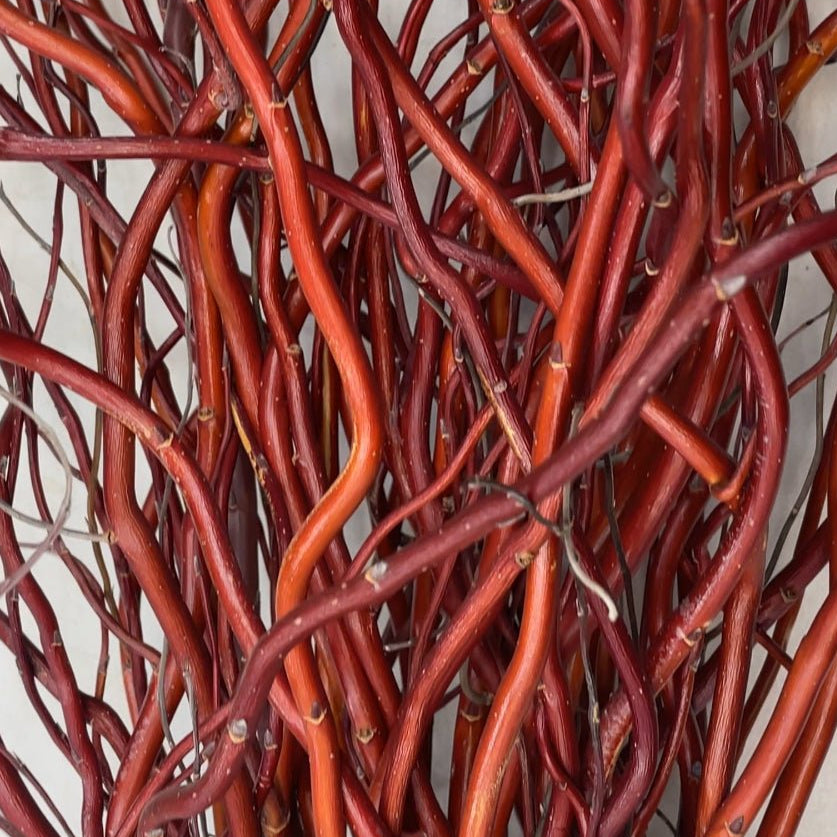
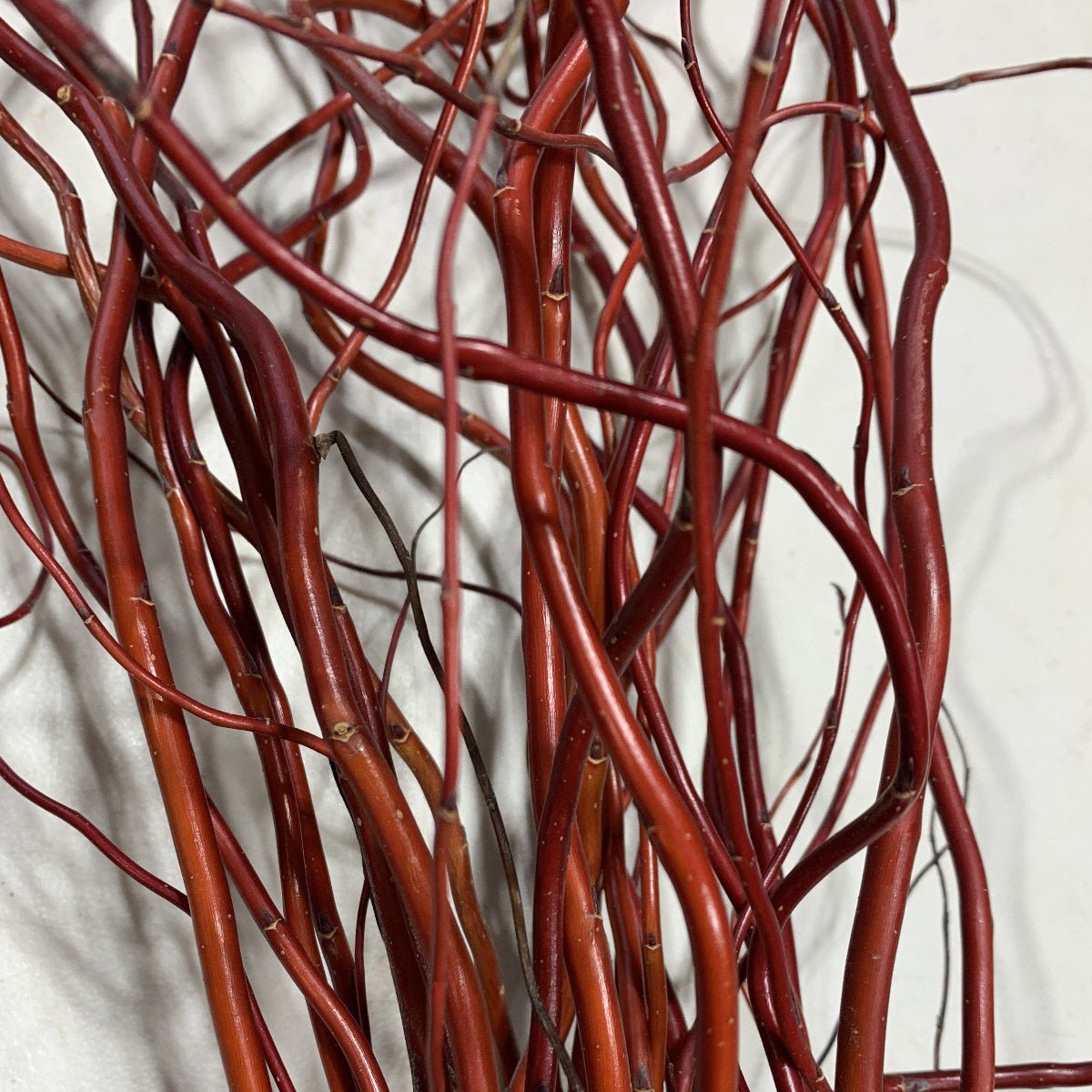
Scarlet Curly Willow has always been one of our favorite trees. It has wild twists and turns with a slight weeping habit, giving it distinct character. It works well as a hedge that can be pruned back annually. The tree displays green foliage against deep red, contorted branches during the spring and summer. To maintain the colorful red bark on the new growth, we coppice it by cutting it back to the ground every year, as older wood eventually turns brown. If grown over a ground cloth, we also recommend cutting back the cloth annually to accommodate the expanding trunk. The dried cuttings and branches are ideal for use in floral arrangements, providing visual interest in both summer and winter.
Botanical Specs & Profile:
Scarlet Curly Willow is a deciduous shrub or small tree known for its spiraling, contorted branches and distinct bark coloration. The new growth features bright red to orange-red stems that provide winter interest after the green, lanceolate leaves drop in autumn. It exhibits an upright to weeping growth habit and adapts to various soil conditions, thriving in full sun to partial shade with consistent moisture. Annual pruning or coppicing is recommended to maintain the intense red coloration on young wood. It is suitable for use as an accent plant, hedge, or specimen in landscapes, and its dried branches are frequently utilized in floral arrangements.
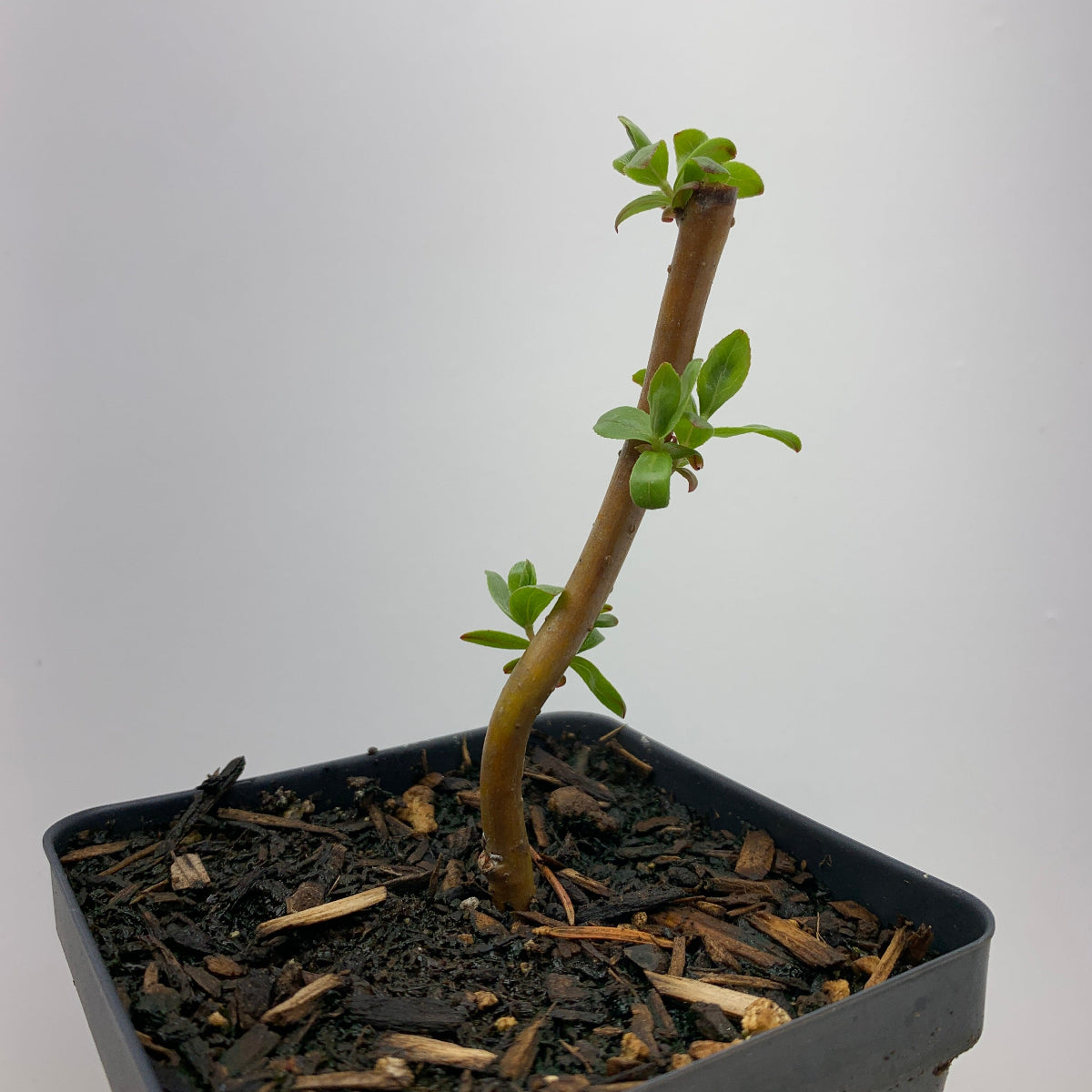
This product is a dormant cutting that will take root, leaf out, and grow if planted under the right conditions. Since plant propagation success rates can vary depending on climate, location, and timing there is no universal recipe for success. If you are new to plant propagation, follow the link on each product page for 'Videos on How to Propagate...'.
Every one of the scarlet curl willow cuttings produced roots and grew. I had a late freeze that I thought would kill them. The leaves and stems withered. They have all came back except for one. I'm very happy with the quality of the cuttings.
Choosing a selection results in a full page refresh.