Sunny Twist Curly Willow (pendulina f. Erythroflexuosa 'Sunny Twist') Cutting
Grower's Notes (Our Experience):
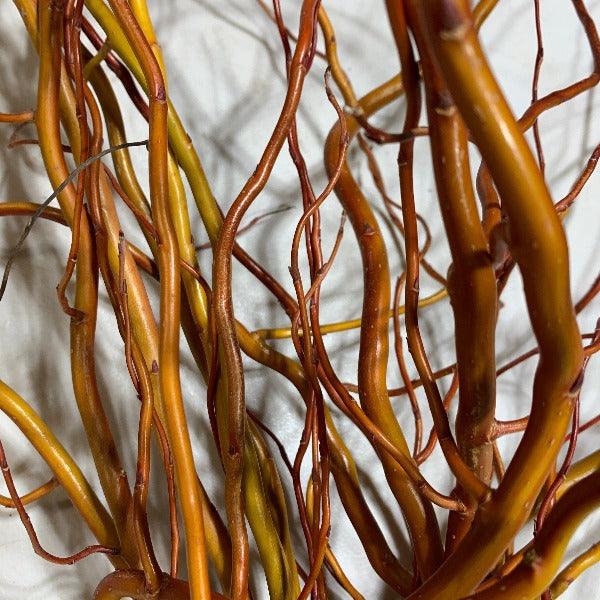
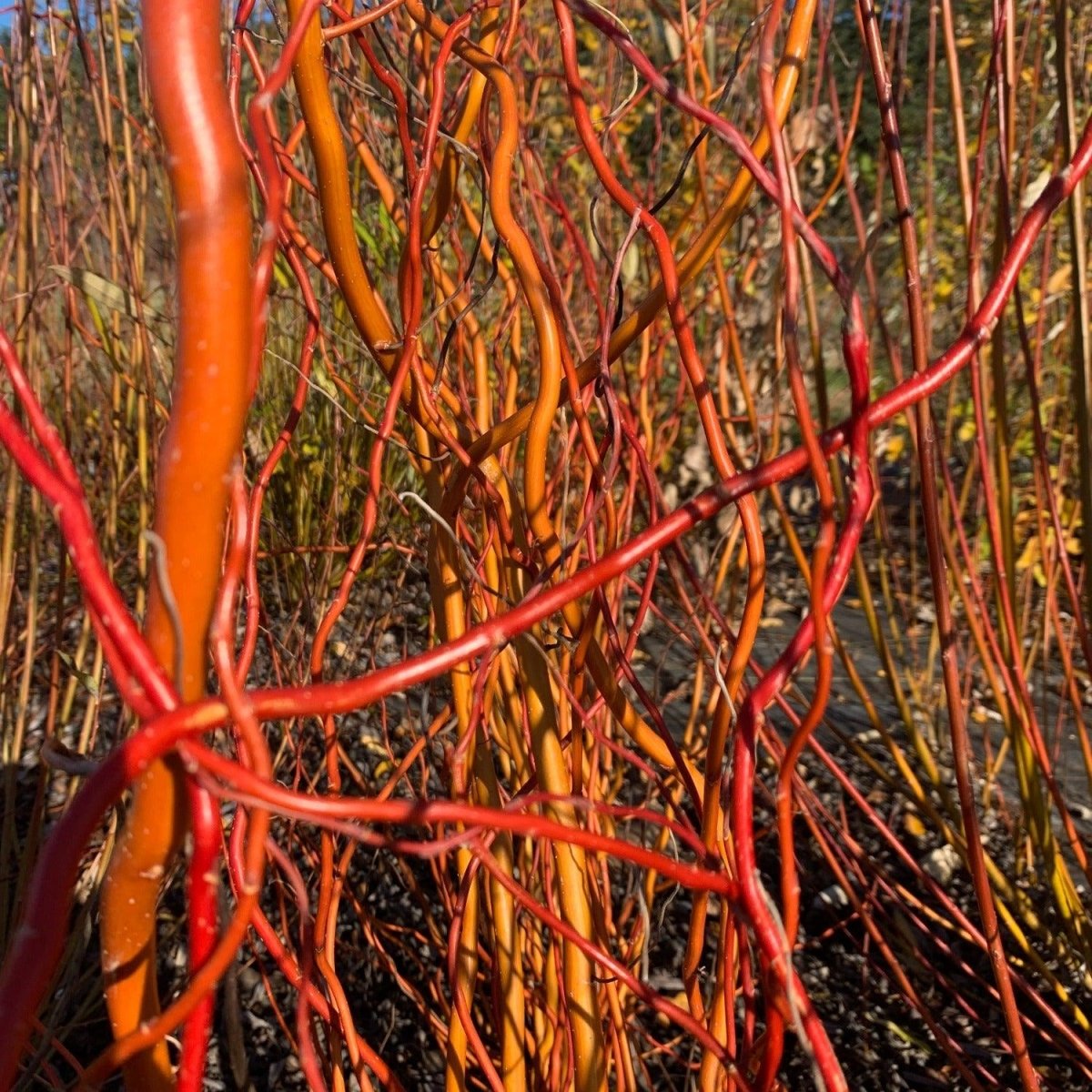
Sunny Twist Curly Willow features unique, contorted growth that goes in various directions. The young stems have a reddish tint that matures to yellow-orange, and when harvested and dried for about six months, the wood turns a warm brown color. Due to the contorted nature of the branches, the tree lacks the support of straight-limbed trees and exhibits a weeping growth habit, particularly toward the top as it grows taller. It is a fast-growing variety that establishes a strong root system by its second year, producing a significant amount of biomass. We grow this variety for its decorative properties, as the harvested wood works well in floral arrangements, and it also functions effectively as a hedge or windbreak.
Botanical Specs & Profile:
Salix x pendulina f. erythroflexuosa 'Sunny Twist', commonly known as Sunny Twist Curly Willow, is a fast-growing deciduous tree reaching a mature height of 25 feet and a width of 15 feet. Developed in the breeding program at SUNY College of Environmental Science and Forestry, it features an upright, urn-shaped growth habit with twisted, contorted branches. The branches display a yellow-green to honey color that turns orange-red in the autumn and winter months after leaf drop. In spring, the plant produces narrow green foliage on its contorted stems. It thrives in full sun to partial shade and adapts to various soil conditions, preferring moist to wet soils. It can be utilized as a hedge, privacy screen, or specimen plant, and can be coppiced annually to produce curly stems for winter floral arrangements and crafts. Hardy in USDA zones 3 through 8.
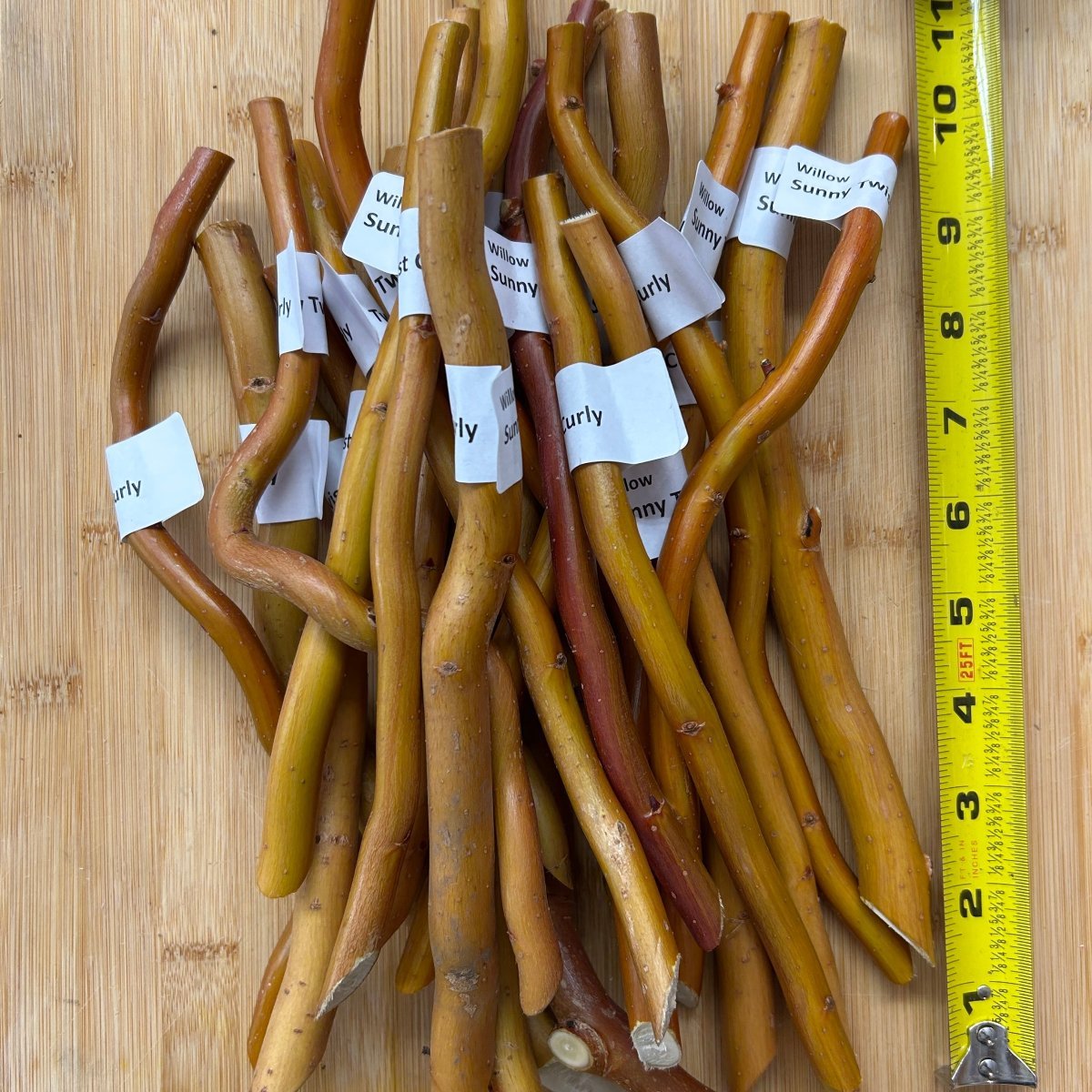
This product is a dormant cutting that will take root, leaf out, and grow if planted under the right conditions. Since plant propagation success rates can vary depending on climate, location, and timing there is no universal recipe for success. If you are new to plant propagation, follow the link on each product page for 'Videos on How to Propagate...'.